

Which Small Animals Usually Require The Most Veterinary Expenses?
More than one-half of U.Due south. households endemic pets at yr-end 2011, and 3-quarters of these pet-owning households fabricated at least one visit to the veterinarian during 2011.
By contrast, the presidents of the AVMA, American Fauna Infirmary Association, and American Association of Feline Practitioners propose that every pet take at least one veterinarian visit annually for preventive care.

The new information appear in the 2012 edition of the U.S. Pet Ownership & Demographics Sourcebook, now available from the AVMA. The book draws on a 2012 survey of more than than 50,000 households and on data from previous editions.
The report has provided a comprehensive picture approximately every five years since 1983 of the ownership and veterinary care of cats, dogs, and other pets.
Pet ownership
At twelvemonth-terminate 2011, 56.0 per centum of households owned pets, down from 57.iv percentage at year-end 2006.
More households endemic dogs than cats in 2011, merely cat-owning households had a mean of 2.1 cats while canis familiaris-owning households had a mean of 1.6 dogs.
The population of pet cats decreased from 81.7 million at yr-cease 2006 to 74.1 million at year-end 2011, and the population of pet dogs decreased from 72.1 million to 69.9 1000000 over the same period.
Dr. Roy Brenton Smith, AAFP president, did not expect to see a subtract in cat ownership.
"I call up the economic system has something to do with it. And people'due south lifestyles accept changed a lot, as well, since I first started practice," said Dr. Smith, who started practice in 1962. "But, of course, some of ... their lifestyle change now is more conducive for them to have cats than to accept dogs because they tin be gone all twenty-four hours and not accept to worry well-nigh coming home and taking the dog out."
Among pet owners, 63.2 percent considered their pets to be family unit members. Another 35.8 percent considered their pets to be pets or companions. The remaining 1 percent considered their pets to be property.
"The homo-animal bail is stronger than ever, just we are very concerned that pets may not exist getting the preventive health care they need," said Dr. Douglas Yard. Aspros, AVMA president.
Veterinary visits
Among cat owners, 44.9 percent did not take their cat or cats to a veterinary during 2011, up from 36.3 per centum in 2006. Among dog owners, xviii.7 percent did not take their canis familiaris or dogs to a veterinarian during 2011, up from 17.iii percent in 2006.

The primary reason that cat and dog owners gave for not visiting a veterinarian during 2011 was that their pets did non get ill or injured.
"What is most perplexing is that so many dog and cat owners understand that routine check-ups and preventive health intendance are important for their pets," Dr. Aspros said. "Almost 90 percent of dog owners and 75 percent of cat owners surveyed indicated that routine check-ups and preventive care are either very or somewhat of import."
Dr. Mark Russak, AAHA president, pointed to the efforts of the Partnership for Preventive Pet Healthcare to promote the value of preventive intendance for dogs and cats. The partnership'southward members are the AVMA, AAHA, AAFP, other veterinary associations, fauna health companies, and other organizations.
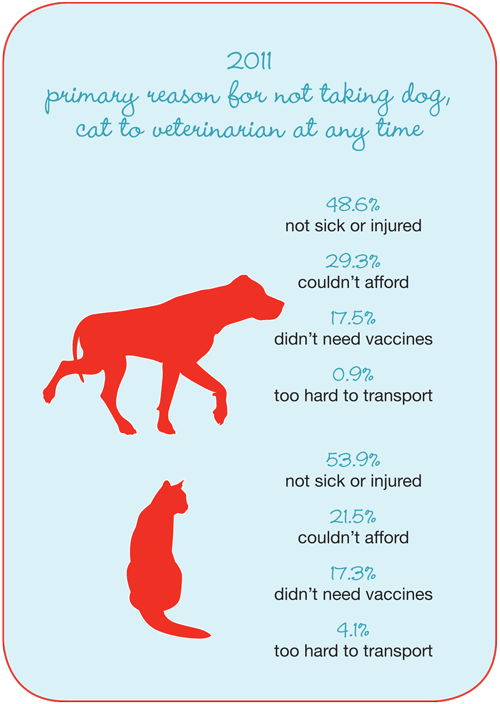
Another 21.v percent of true cat owners and 29.3 percent of canis familiaris owners who did not visit a veterinarian said they could non afford it.
"The affordability factor is critical," Dr. Russak said. "And I recollect if nosotros make it more affordable for clients, then they're going to tend to bring the animals in."
Dr. Russak listed pet insurance, health plans, and credit as means to brand veterinary care more than affordable. Amid dog owners, 5.7 per centum had insurance for their dogs in 2011. Amongst cat owners, 2.six percent had insurance for their cats.
Despite the number of pet owners who did not visit a veterinary, total veterinary visits increased from 193.0 million in 2006 to 202.4 one thousand thousand in 2011. Total veterinary visits for dogs increased from 119.iv million to 130.4 million, and mean number of veterinary visits per dog increased from 1.v to 1.6.
Total veterinary visits for cats decreased from 63.3 million to 60.5 meg, but mean number of veterinary visits per true cat stayed constant at 0.seven because the population of cats decreased.
The care of cats
Data from the 2007 edition of the demographics sourcebook contributed to the current movement in the veterinarian profession to address the disparity betwixt cats and dogs in veterinarian care.
Shortly after the release of the 2007 report, a grouping of organizations held a elevation that led to the formation of the Goad Council to advocate for feline health and welfare. Recently, the AAFP and CATalyst Quango have created programs to help practices become cat-friendly, amid other efforts to improve the care of cats.

In September 2012, the AAFP announced a partnership with Bayer HealthCare LLC to uncover and remove obstacles to routine veterinary visits for cats.
The Partnership for Preventive Pet Healthcare besides has an objective to make preventive treat cats a priority.
Veterinary expenditures
The 2012 sourcebook reveals that total veterinary expenditures for all pets increased from $24.5 billion during 2006 to $28.0 bil-panthera leo during 2011, an increment of 14.3 per centum, as the Consumer Price Index increased eleven.6 percent.
The Bang-up Recession officially lasted from December 2007 to June 2009, although unemployment remains high.
"In fifty years, this is the start fourth dimension in my practice I have really felt the consequence of the economic system," Dr. Smith said. "But I meet it coming dorsum—slowly, only it'south coming back."

The mean veterinary expenditure per cat increased from $81 during 2006 to $ninety during 2011, and the mean expenditure per canis familiaris increased from $200 to $227.
True cat and dog owners reported that physical examinations and vaccinations were the acme veterinary services or products provided at their most contempo veterinary visit. Rounding out the top five services or products were laboratory tests, drugs or medications, and flea or tick products.
Income for pet-owning households was only slightly higher than income for all households.
For pet-owning households, veterinary expenditures increased in relation to income.
"Shouldn't that number be the same, straight across the board?" Dr. Russak asked. "We are charging what we should be charging, just nobody e'er explained to the pet-owning public why we're worth it."
He said the veterinary profession needs to ameliorate marketing and client service while finding ways to aid clients beget intendance.
Owner demographics
Many more than details about the demographics of pet owners are available from the sourcebook.
Families keep to be more than likely to ain pets than nonfamily households are, with 66.4 percent of families owning pets sometime during 2011. Notwithstanding, pet ownership amongst nonfamily households increased from 46.9 percent during 2006 to 54.vii percent during 2011.

Pet ownership was higher among people who lived in a larger household, worked total time, owned a abode, and lived in a smaller community. Pet ownership was lower among people with an advanced caste beyond higher.
White respondents were most probable to own pets in 2011 (65.6 percent), followed by respondents in the Spanish/Hispanic category (62.5 percent), Asian/Pacific Islander/American Indian/Aleut Eskimo category (47.7 percent) and Black/African-American category (32.7 percent).
Beyond cats and dogs
The sourcebook also offers details near the ownership and veterinary care of pets other than cats and dogs: pet birds, horses that owners categorize as pets, and specialty and exotic pets.
The population of pet birds decreased from xi.2 million to 8.three million between year-end 2006 and year-end 2011. But 12.4 percent of bird owners took their bird or birds to a veterinarian during 2011.
The population of pet horses decreased from vii.3 1000000 to iv.nine million. Among horse owners, 53.viii percent had veterinary visits for their horse or horses during 2011.
The percentage of households that own specialty and exotic pets decreased from 12.7 percent to 10.six pct. Popular pets included fish, rabbits, turtles, hamsters, and republic of guinea pigs. Households that endemic specialty and exotic pets had a mean of 0.4 veterinary visits for those pets during 2011.
Many households own pets in more one of the categories of cats, dogs, birds, horses, and specialty and exotic pets. Of pet-owning households, 15.iii per centum own a combination of cats and dogs, while 25.v pct own other combinations of pets. Dr. Russak sees an opportunity for veterinarians to work more with animals other than cats and dogs.
Ordering information

The AVMA has released the 2012 U.Due south. Pet Ownership and Demographics Sourcebook in book course and as a downloadable PDF file. The written report is available for purchase through the AVMA Store by visiting www.avma.org/products, then clicking on "Market Research Reports," or by calling (800) 248-2862, Ext. 6655.
Source: https://www.avma.org/javma-news/2013-02-01/vital-statistics
Posted by: childsrecare68.blogspot.com
0 Response to "Which Small Animals Usually Require The Most Veterinary Expenses?"
Post a Comment