

How To Living Animals Survive In Water
How Do Deep Sea Creatures Survive The Loftier Water Force per unit area?
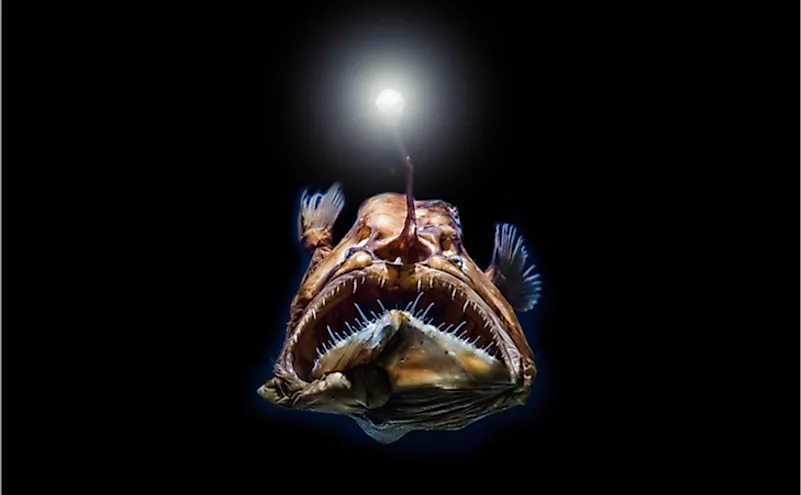
Abyssal creatures are animals that live beneath the photic zone of the ocean. The photic zone, also known as the sunlight zone, is the uppermost layer of a lake or ocean that receives sufficient sunlight to support aquatic institute life. Well-nigh of the deep-body of water creatures live thousands of feet below the h2o surface. The survival challenges faced past these animals include footling nutrient, high water pressure, low oxygen levels, darkness, and extremely cold temperatures. Examples of deep-body of water creatures are sharks, whales, seals, crabs, Atlantic Wolffish pair, sea urchins, fangtooth fish, giant tube worms, vampire squids, Pacific Viperfish, anglers, crimson-lipped batfish, dumbo octopus, hairy frogfish, coffinfish, spotted handfish, giant isopods, Atlantic footballfish, zombie worms, and many others.
These creatures have several adaptations like compressible lungs, lung-similar swim bladders, etc., to help them overcome the loftier h2o pressure in their deep-h2o environs.
Adaptation of the Deep Sea Creatures to High H2o Pressure
Ideally, high force per unit area in the deep body of water should crash the ocean creatures. But, the incredible fact is that many marine and fish species survive even at the highest possible pressure found equally deep equally 25,000 anxiety below the sea surface. Earlier diving into the h2o, many deep-sea creatures exhale nearly ninety% of the air in their lungs and proceed only around10% of the oxygen available for their use. The survival of the marine creatures in less oxygen supply is made possible by several factors.
Property The Breath For Hours
Some whales and seals take shocked the world with their resilience in high-pressure level abyssal waters. For example, the Cuvier'south beaked whale tin can dive equally deep as two,992 meters and withhold its jiff in h2o for a record 2 hours and 18 minutes. On the other manus, the elephant seal can concur its breath in water for ii hours.
Completely Compressible Lungs
The beaked whale is the deepest diving cetacean. Under pressure level, its lung collapses forcing all of the gas in its lungs out into the muscles and bloodstream where the gas is dissolved. The muscles are adjusted to hold more myoglobin while the claret possesses more hemoglobin for storage of oxygen. Collapsing of the lungs results in reduced air pockets and minimum oxygen available for its survival.
Lowered Heart Rate
In some creatures, the heart rate is minimized to about 4 beats per minute while others stop breathing for a while when diving into the abyssal.
Reduced Motion
Some abyssal creatures reduce their movement so that they glide rather than swim down. Gliding is a process that requires no muscle movement; saving the creatures' oxygen for employ on their journeying back to the water surface.
Lowered Metabolic Action
Under high barometric pressure, some deep-ocean creatures such every bit whales and seals shut downwardly their digestion, liver, and kidney functions.
Lung-similar Swim Bladders
A grouping of abyssal creatures have lung-similar swim bladders which assistance in decision-making their buoyancy. The swim bladders do not collapse because in the deep sea the gas inside is equivalent to the pressure of the water outside.
Presence Of Trimethylamine Oxide (TMAO)
Presence of TMAO in deep-ocean fish prevents the distortion and compression of proteins and other vital molecules within the trunk under intense external pressure level.
No Nitrogen Absorption
Lack of nitrogen absorption at deep pressure prevents the evolution of nitrogen narcosis and decompression sickness.
Larn more about the deep sea ecology here.
Source: https://www.worldatlas.com/articles/how-do-deep-sea-creatures-survive-the-high-water-pressure.html
Posted by: childsrecare68.blogspot.com
0 Response to "How To Living Animals Survive In Water"
Post a Comment